
Setting daily or weekly deposit boundaries allows you to enjoy the various arcade and color prediction challenges available on Jai Club without overspending. The implementation of a structured framework for self-regulation stands as the most critical element for anyone interacting with modern online entertainment platforms. Developing a sustainable relationship with these digital platforms requires players to prioritize emotional control and rigid budget enforcement over impulsive decision-making. Utilizing a professional guide to responsible gaming helps players transition away from chaotic habits toward highly predictable, low-risk engagement patterns.
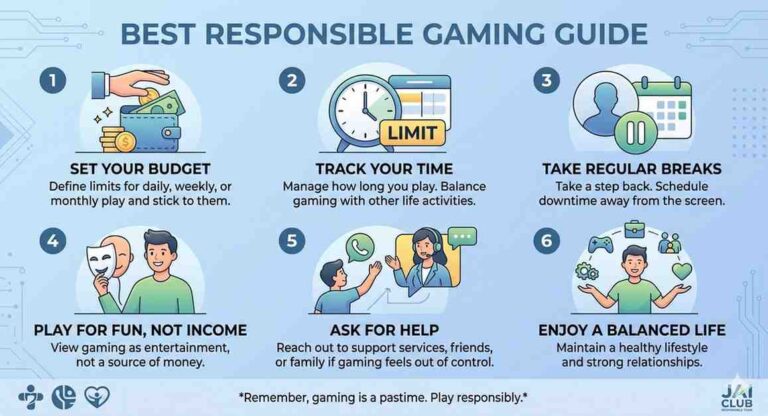
This comprehensive approach ensures that online platforms remain a source of casual entertainment rather than a source of financial stress or anxiety. By treating platform participation with the same discipline as any other recreational expense, users can safeguard their lifestyle while enjoying modern digital systems.
- Establishing pre-determined operational budgets prevents individuals from inadvertently exposing critical personal capital to platform volatility.
- Referencing an authoritative guide to responsible gaming equips everyday users with the exact vocabulary needed to evaluate their own habits objectively.
- Modern regulatory frameworks mandate that digital platforms actively provide clear information regarding long-term statistical outcome probabilities.
- Embracing a proactive safety mindset shifts the player focus from chasing speculative returns toward enjoying the core experiential interface.
Recognizing the Early Signs of Problem Gambling
Identifying behavioral shifts in their infancy requires consistent, honest self-reflection and an awareness of changes in your everyday emotional baseline. Problematic habits rarely develop overnight; instead, they manifest as subtle shifts such as extending session lengths or constantly thinking about past losses. Consulting a professional responsible gaming guide provides users with the precise diagnostic benchmarks needed to catch dangerous behavioral escalations before they worsen.
Recognizing when to take a step back and utilizing the self-exclusion features keeps your Jai Club experience completely positive and controlled. Early red flags include treating a casual recreational activity as a legitimate source of income or hiding your gaming habits from friends and family. Addressing these initial indicators immediately allows players to recalibrate their routines and maintain healthy boundaries before negative patterns become deeply ingrained.
- Spending increasing amounts of time thinking about platform mechanics during vital professional or family obligations indicates a potential behavioral shift.
- Utilizing a comprehensive responsible gaming guide helps individuals spot the cognitive biases that lead people to chase losses during down periods.
- Experiencing sudden bursts of irritability or anxiety when attempting to cut back on platform usage highlights an unhealthy psychological dependency.
- Bypassing pre-planned financial boundaries to recover lost funds is a primary indicator that your current relationship with the platform requires intervention.
Jai Club’s Built-In Responsible Gaming Tools & Features
Modern digital entertainment platforms integrate robust technical safety nets directly into their core software interfaces to assist users in maintaining operational discipline. These built-in safety controls give players the power to hardcode their personal boundaries directly into the application’s engine, bypassing the need for pure willpower alone. Reviewing the efficacy of these protective tools in a best responsible gaming guide showcases how automated system locks can successfully prevent impulsive behavioral spikes. From instant cooling-off switches to automated account freezes, these features are specifically designed to return control to the player during moments of high emotion. Relying on these automated guardrails turns abstract safety concepts into practical, everyday account settings that protect your capital from impulsive choices.
- Automated interface notifications regularly remind active players of their total continuous session duration and aggregate financial velocity.
- Consulting a top-tier best responsible gaming guide provides practical step-by-step instructions on configuring automated account restriction options.
- Temporary cooling-off features allow users to instantly lock themselves out of their profiles for short periods during emotional stretches.
- Internal algorithms monitor sudden shifts in user deposit frequency to automatically recommend helpful self-protection tools.
How to Set Deposit & Spending Limits on Jai Club?
Configuring strict financial boundaries within your account settings is the single most effective action a player can take to guarantee long-term asset protection. By setting rigid daily, weekly, or monthly deposit caps, you ensure that your platform expenditures never cross over into funds needed for essential living expenses. Implementing these limits relies heavily on standard responsible gaming tips that emphasize setting financial boundaries during a calm, objective state of mind. Once these hard limits are saved within the system dashboard, any attempts to lift or increase them trigger a mandatory cooling-off delay. This intentional technical delay acts as an excellent buffer, giving the user ample time to regain logical composure and prevent impulsive, emotionally driven deposits.
- Navigating to the core account security panel allows users to instantly establish hard limits on daily capital transfers.
- Adhering to proven responsible gaming tips ensures that your specified budget allocations align perfectly with your actual disposable income.
- System-enforced cooling-off periods prevent immediate, impulsive changes to your financial caps during active gaming sessions.
- Monthly spending summaries provide absolute transparency, helping users keep their long-term entertainment costs completely visible and under control.
How to Use the Self-Exclusion Feature?
When standard voluntary restrictions prove insufficient for maintaining healthy boundaries, utilizing a comprehensive self-exclusion mechanism becomes necessary. This powerful tool completely revokes an individual’s platform access across the entire network architecture for extended durations ranging from several months to multiple years. According to the best responsible gaming tips found in industry safety manuals, self-exclusion should be treated as a definitive, unyielding commitment to personal well-being. During an active exclusion period, the platform uses advanced verification screening to block any attempts to create workaround accounts or bypass the restriction. This complete block gives individuals the necessary time and space to step away from the digital interface and focus entirely on personal recovery without distraction.
- Activating the complete self-exclusion tool instantly terminates all active platform access permissions and halts promotional marketing messages.
- Following the best responsible gaming tips means choosing an exclusion timeframe that gives you enough room to break psychological habits.
- Platform database systems lock verified identity markers to prevent the unauthorized creation of duplicate accounts during exclusion windows.
- Registered user balances are safely returned to linked bank profiles through secure, automated system processes before the account closes.
Gambling vs Problem Gambling: Understanding the Difference
Drawing a clear line between casual recreational play and compulsive behavioral patterns requires a precise understanding of your underlying motivations and emotional states. Safe platform use is defined by absolute control, fixed financial limits, and viewing any entry fees purely as the cost of temporary digital entertainment. Conversely, studying the insights within a premier best responsible gaming guide highlights how compulsive behavior stems from using the platform as a psychological escape tool. When an activity shifts from a fun, conscious choice into a desperate, uncontrollable habit driven by a need to fix financial problems, the relationship has fundamentally changed. Recognizing this shift requires looking past your raw win-loss metrics to analyze the emotional control you retain over your sessions.
- Casual users view platform costs similarly to buying a movie ticket, expecting zero guaranteed financial returns from the experience.
- Reviewing case studies in a best responsible gaming guide helps players identify the transition from casual fun to compulsive habit.
- Compulsive behavior often involves lying about how long sessions last or downplaying the actual amount of capital spent.
- Maintaining complete control over when you log off differentiates healthy, balanced users from those struggling with dependency.
How to Set Session Time Limits & Reality Checks?
Managing your time inside digital environments requires a structured combination of automated software alerts and disciplined personal habits. Human time perception distorts during high-focus activities, making it incredibly easy to spend hours on an app without realizing how much time has passed. Incorporating the best tips for responsible gaming into your routine means setting up automated reality checks that break up your gameplay at regular intervals. These pop-up alerts pause the interface completely, showing you a clear breakdown of your current session duration and net financial changes. This forced pause breaks the psychological loop of continuous play, giving you a perfect moment to step away and make a logical decision about whether to continue.
- Activating automated time-out notifications guarantees that you receive clear alerts at fixed operational milestones.
- Using the best tips for responsible gaming helps players break up long sessions with healthy physical breaks away from the screen.
- Reality check pop-ups display objective data, forcing users to see their actual session costs rather than relying on memory.
- Setting a hard automatic log-off limit prevents the common habit of extending sessions late into the night.
Financial Warning Signs Every Jai Club Player Should Know
The negative impacts of a developing dependency usually show up first within a user’s personal banking and financial patterns. Tracking these financial warning signs early on is essential for preventing long-term credit damage or severe personal debt. Reading through a top-tier guide to responsible gaming shows that borrowing money or dipping into savings to fund an app account is an immediate crisis signal. Other key indicators include hiding bank statements from family members, opening new credit lines for digital accounts, or feeling a constant urge to make larger transactions to get the same excitement. Monitoring your financial trends with absolute honesty prevents temporary entertainment choices from causing long-term financial distress.
- Using credit cards or personal loans to fund your account signals that your platform habits have outgrown your disposable income.
- Consulting a professional guide to responsible gaming highlights the danger of tapping into long-term savings for casual play.
- Noticing that your average transaction size is steadily creeping upward reveals a growing tolerance that requires immediate limits.
- Constantly feeling stressed about your monthly credit card statements confirms that your platform spending has disrupted your budget.
Support Resources for Problem Gambling in India
For individuals dealing with severe behavioral patterns, connecting with professional support networks is an essential step toward regaining life balance. The psychological and behavioral health landscape in India offers a growing number of specialized resources designed to help people overcome digital addictions. Consulting a trusted responsible gaming guide can point you toward free helplines, specialized counseling centers, and anonymous peer support organizations operating across the country. These professional services offer a safe, completely confidential environment to unpack behavioral habits and build effective lifestyle strategies. Reaching out to these trained experts ensures you do not have to navigate the path toward behavioral recovery alone.
- National behavioral health helplines offer confidential, immediate guidance from trained experts who understand digital addictions.
- Referencing a localized responsible gaming guide connects users with community support groups tailored to specific cultural settings.
- Specialized counseling centers help individuals identify the underlying emotional triggers that drive compulsive platform use.
- Anonymous peer networks offer an empathetic, non-judgmental space to share experiences and practical recovery strategies.
How to Talk to Someone You Know About a Gambling Problem?
Approaching a friend or family member regarding their changing digital platform habits requires immense empathy, careful timing, and a calm, non-judgmental tone. Leading with angry accusations or harsh financial lectures usually forces the individual into defensive denial, shutting down constructive communication entirely. Instead, sharing practical insights from a best responsible gaming guide allows you to frame the conversation around care for their health and well-being. Focus the talk on specific behavioral changes you have personally noticed, like shifts in their mood or changes in their daily schedule, rather than focusing solely on money losses. Offering to help them look into professional support channels or set up app safety features shows them they have a supportive partner through the recovery process.
- Choosing a quiet, private setting for the conversation ensures the individual feels safe and does not feel attacked or embarrassed.
- Sharing clear examples from a trusted best responsible gaming guide helps ground the discussion in objective behavioral patterns.
- Expressing your concern using calm, supportive language prevents the conversation from turning into a tense emotional argument.
- Helping them set up built-in app restrictions offers an immediate, practical way to lower their daily risk levels.
Final Thoughts
Building a healthy, lasting relationship with digital entertainment apps requires continuous self-reflection, rigid financial discipline, and a willingness to use built-in safety features. Protecting your personal and financial well-being is an ongoing practice that relies on reviewing solid advice, like a proven guide to responsible gaming. Enjoying digital entertainment safely means ensuring that these apps remain a small, controlled part of your life rather than a primary focus. By configuring hard account limits early and staying honest about your habits, you keep total control over your digital experiences. Make a commitment to safe, responsible habits today to keep your digital experiences fun, balanced, and completely secure.
Frequentlty Asked Questions
What is responsible gaming on Jai Club?
Responsible gaming means participating in online entertainment and predictions as a casual, fun pastime rather than a primary source of income. It involves setting strict limits on your time and money, maintaining a healthy balance in daily life, and never wagering more than you can comfortably afford to lose.
How do I set daily or monthly deposit limits on my account?
To manage your spending, navigate to your account settings and select the self-regulation or safety options. From there, you can define specific maximum caps on how much money you can deposit into your wallet on a daily, weekly, or monthly basis to prevent overspending.
What tools does Jai Club offer to help control gaming habits?
The platform provides multiple self-regulation features, including configurable deposit limits, session time reminders, detailed transaction histories to track overall spend, and a self-exclusion tool that allows you to temporarily or permanently lock your account if you need a break.
How can I temporarily freeze or deactivate my Jai Club account?
If you want to take a step back, you can utilize the self-exclusion or Take a Break feature located in your account security tab. This lets you restrict access to your profile for a specified duration such as 24 hours, 7 days or 30 days during which you will not be able to log in or deposit funds.
What are the warning signs of problematic gaming behavior?
Common red flags include chasing losses to recover spent money, spending more time on the platform than intended, neglecting personal or professional responsibilities, borrowing money to play, or experiencing stress and mood swings related to game outcomes.
What is chasing losses and why should it be avoided?
Chasing losses is the habit of immediately placing larger wagers right after a loss in a desperate attempt to break even. This often leads to a rapid depletion of your balance and emotional decisions; it is always better to step away from the platform and take a break.
How can I balance online gaming with my personal and professional life?
Treat online predictions as a minor form of recreation. Set a fixed timer before you start playing, and log out immediately once your time is up. Ensure that your leisure activities never interfere with your career, family obligations, or social life.
Can I permanently delete my account if I feel I am losing control?
Yes, if you decide that self-exclusion isn’t enough and you want to stop completely, you can contact official customer support to request permanent account closure. Once an account is permanently deactivated for responsible gaming reasons, it cannot be reopened.
Are minor accounts permitted to use the platform?
No, strict age verification protocols are in place to prevent underage gaming. Users must meet the legal age requirement (18 years or older in most jurisdictions) to create an account, complete verification, and participate in any activities on the platform.
Where can I find external support if I need help with my gaming habits?
If you or someone you know is struggling to maintain a healthy relationship with online gaming, consider reaching out to independent, professional counseling organizations and helplines that specialize in digital habits and financial self-discipline.